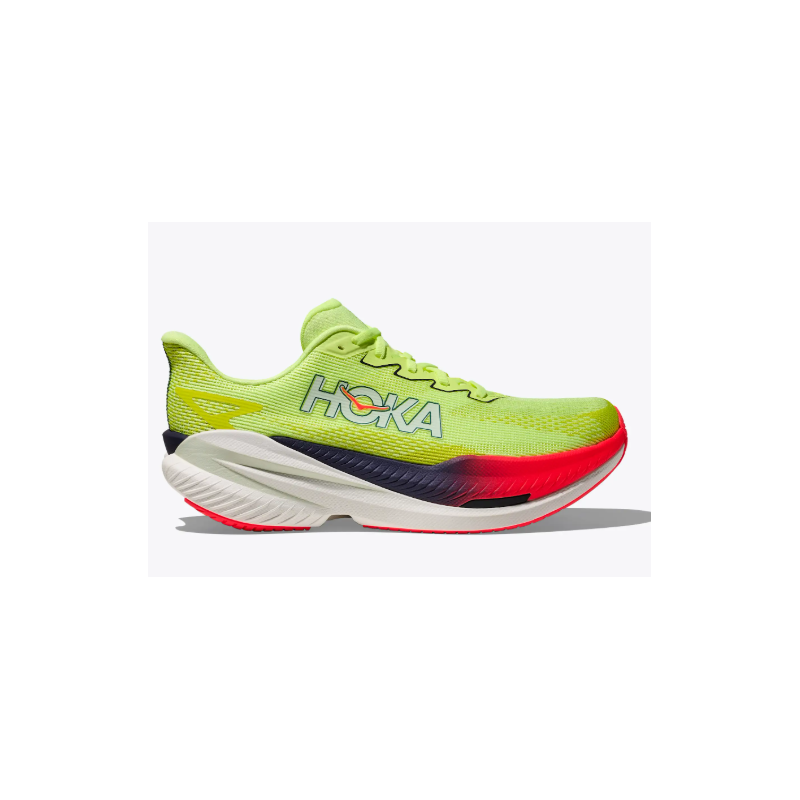
A closer look
The Mach X 3 uses two midsole densities. The upper layer is PEBA, and the Pebax® plate is best assessed as you move from landing to push-off. The MetaRocker™ profile shapes that transition for sustained faster paces.
The breathable upper, softer tongue and revised collar are the parts to check when lacing up and moving. HOKA lists a 5 mm drop and an indicative 288 g weight for this men’s model. NZS is HOKA’s Neon Yuzu / Squid Ink colourway.
4 highlights
- Two densities underfootThe top PEBA layer works with a dual-density midsole. Compare the feel with the foam in your easy-run shoes.
- A point of reference at push-offThe Pebax® plate plays a part in the roll through the shoe. Notice its effect when you pick up the pace after an easy section.
- A profile designed for tempoMetaRocker™ geometry supports the transition to the forefoot. Check the feel at your own sustained pace.
- Check the fit on the moveThe breathable upper, softer tongue and reworked collar give you three places to check once the shoe is laced.
Which runner?
For road runners who build tempo blocks or faster repetitions into their week and want to compare a plated training shoe with their regular pair.
The Tripp Sport view
With the Mach X 3, I would first check the transition from landing to push-off. Try the Pebax® plate and MetaRocker™ combination at the pace you will actually use it for.
Tripp Sport advice
Try the Mach X 3 by going from a few easy strides into a short tempo block. Compare the roll onto the forefoot and heel hold with your current pair. Use its 5 mm drop as a reference when switching.